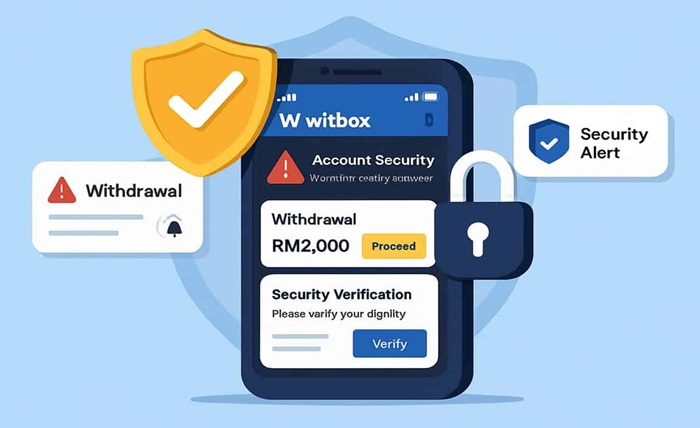
The login screen is the part of online gaming people think about least and should probably think about most. It’s the single door between your account — and the money attached to it — and everyone else. Most players only pay attention to it when something goes wrong: a forgotten password, an app that won’t open, or worse, a suspicious login they didn’t make. A little understanding of how account access works, and how to keep it secure, saves a lot of grief. Here’s a practical rundown for Malaysian players.
How players actually access their accounts
There are generally two routes in: through a mobile browser, or through a dedicated app. The browser route is the simplest — you visit the site, enter your details, and you’re in, with nothing to install. The app route means downloading and keeping a dedicated application on your phone, which usually offers faster access and a smoother day-to-day experience once it’s set up.
Players who use one platform regularly often prefer the app, since something like a Winbox Login Apk keeps everything one tap away rather than requiring a trip back to the site each time. The trade-off is that apps need to be kept updated, and — crucially — installed from the right source, which we’ll come to. Whichever route you use, the security principles underneath are the same.
Building a login you can trust
Account security starts with the basics, and the basics genuinely matter. A strong, unique password is the foundation — unique meaning you don’t reuse it from your email, your social media, or another platform. The reason is simple: if one service is ever breached, reused passwords let attackers walk straight into everything else. A password manager makes keeping unique passwords painless, but even a memorable passphrase you use nowhere else is a big step up from a recycled one.
If a platform offers two-factor authentication or login alerts, turning them on is one of the highest-value few seconds you can spend. Two-factor means that even someone who somehow learns your password still can’t get in without a second code, usually sent to your phone. Login alerts, meanwhile, tell you the moment a new device accesses your account — an early warning that’s worth its weight if anything ever goes wrong.
Downloading the app from the right place
Because casino apps usually aren’t on the main app stores, players install them directly — and this is where security and access intersect. The single most important rule is to download only from the platform’s official source. A genuine operator such as Winbox88 makes its official download path clear and easy to find, precisely so users don’t go hunting for the app through random forums or unfamiliar group chats, which is exactly where tampered or fake versions circulate.
Before installing, confirm you’re on the real site and not a copycat — checking the exact domain spelling catches a surprising number of imitation pages designed to harvest logins. If a download link arrives unexpectedly through a message or comes from a source you can’t verify, that hesitation is worth listening to. A fake app can look identical to the real one while quietly capturing everything you type into it.
Recognising the common threats
Most account compromises don’t come from sophisticated hacking — they come from people being tricked into handing over access. Phishing is the big one: a message or page that imitates the real platform and asks you to “verify” your login. The rule that defeats nearly all of it is simple and absolute — no legitimate platform will ever ask for your password or a one-time code through a chat, an SMS, or a phone call. Anyone who does is trying to scam you, full stop.
Be wary, too, of logging into accounts tied to your money over public wifi at malls or cafés, where traffic is easier to intercept. And treat any message creating artificial urgency — “your account will be locked in ten minutes” — with suspicion, since pressure is the scammer’s favourite tool. Slowing down and going directly to the official site or app, rather than tapping a link someone sent you, defuses most of these attempts.
When you can’t get in
Login problems are common and usually fixable. The most frequent cause is simply a mistyped password or a username confusion, so it’s worth carefully re-entering before assuming the worst. If you’ve genuinely forgotten your password, the proper route is the platform’s official recovery process — which is exactly why registering with a real, active phone number and email matters so much, since that’s how recovery codes reach you.
If an app won’t open or behaves oddly, the usual fixes are updating it to the latest version or reinstalling from the official source. And if you ever suspect someone else has accessed your account, the right move is to change your password immediately and contact support rather than waiting to see what happens. Acting early almost always limits the damage.
Good habits worth keeping
A few small routines keep an account healthy over time. Logging out on shared or borrowed devices is an obvious one that’s easy to forget. Keeping the app updated matters, since updates often patch security issues. And periodically reviewing where you’re logged in, if the platform shows that, helps you catch anything unexpected early.
None of this is complicated or time-consuming. It’s the digital equivalent of locking your front door — a handful of small habits that, taken together, make your account a far harder target and your peace of mind a lot more solid.
The takeaway
Account access is the quiet foundation of a safe online gaming experience. Choose how you log in — browser or app — based on your habits, but install any app only from the platform’s verified official source. Build a strong, unique password, switch on two-factor authentication and login alerts if they’re offered, and treat any request for your password or codes as a scam by default. Handle login troubles through official recovery channels, and keep a few simple security habits going. Get the door right, and everything behind it stays a lot safer.