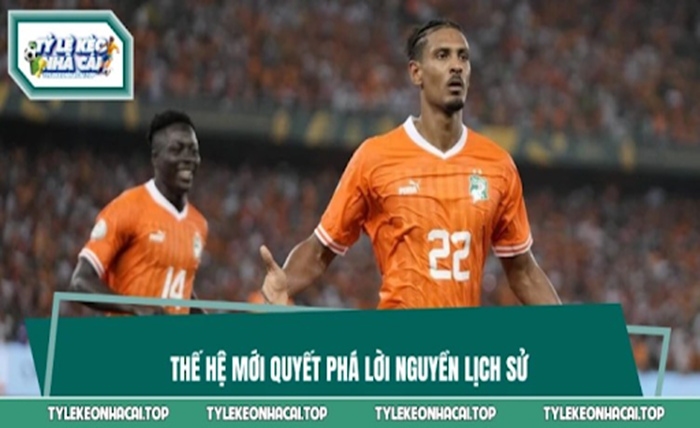
Ivory Coast’s qualification campaign for the 2026 FIFA World Cup has been a story of rebuilding, discipline, and a new generation stepping into responsibility. After missing both the 2018 and 2022 editions, the team returned with a clear mission: qualify with control and restore their place among Africa’s elite. Under head coach Emerse Faé, the Elephants combined defensive stability with improved attacking efficiency to complete a strong qualification run and secure their place in the tournament held across the United States, Canada, and Mexico.
bóng đá kèo nhà cái refer to betting lines offered by bookmakers for football matches. They help users compare match predictions, understand probability outcomes, and analyze different betting options before placing a wager. Many football fans follow these odds to track market movements and make more informed decisions.
CAF Qualification Structure and What Ivory Coast Faced
The African qualification pathway for 2026 was more demanding than previous cycles. CAF organized teams into multiple groups where only the group winners earned direct qualification, while a few runners-up entered additional playoff rounds. This meant there was very little room for error across home-and-away fixtures.
Ivory Coast were placed in a competitive group and had to maintain consistency across ten matches. The format rewarded discipline over flashes of brilliance, pushing teams to perform both home and away without lapses in focus. For the Elephants, the goal was simple: top the group and avoid the uncertainty of playoffs.
Group F Dominance and Unbeaten Run
Ivory Coast quickly established control in their qualifying group. They produced a remarkable unbeaten run, finishing at the top of Group F with a record built on consistency rather than narrow escapes. Across ten matches, they combined solid defending with efficient finishing, often controlling games without needing to dominate possession excessively.
What stood out most was their defensive record. The team kept multiple clean sheets, showing tactical maturity and improved organization compared to previous cycles. Even when matches became tight, they rarely lost structure, which proved crucial in away fixtures where African qualifiers can be particularly challenging.
Key Turning Point: The Match Against Kenya

Football News covers the latest updates from leagues, tournaments, transfers, injuries, and match results around the world. It helps fans stay informed about ongoing competitions, team performance, and important developments in both domestic and international football.
One of the defining moments of Ivory Coast’s qualification campaign came in their decisive clash against Kenya. Played in Abidjan, the match carried huge pressure as a win would secure their World Cup ticket.
Ivory Coast responded in dominant fashion with a 3–0 victory. The team controlled the tempo from the start, with Franck Kessié leading the midfield and setting the tone. Early pressure forced mistakes from Kenya, and Ivory Coast capitalized efficiently. The win not only confirmed qualification but also symbolized their return to form on home soil, triggering celebrations across the country.
Squad Evolution and the New Generation
One of the biggest changes in this Ivory Coast team is the blend of youth and experience. Unlike previous World Cup cycles, this squad is not built around a single superstar but rather a balanced system where responsibilities are shared.
The squad has grown around a young core supported by experienced leaders. Players developed in European leagues have added pace, technical ability, and tactical awareness. This evolution has helped Ivory Coast become more adaptable against different styles of opposition, whether facing defensive teams in Africa or high-pressing sides internationally.
Star Players Leading the Project
Several individuals have played key roles in Ivory Coast’s rise. Franck Kessié remains the midfield anchor, offering leadership, physical strength, and control in key moments. Amad Diallo has brought creativity and unpredictability in attack, often changing games with his movement and final pass.
Alongside them, emerging talents like Yan Diomande and others have added speed and direct attacking threat. This mix has given Ivory Coast multiple attacking options rather than relying on a single focal point, making them harder to defend against.
Tactical Approach Under Emerse Faé
Emerse Faé has implemented a system built on balance. Rather than overcommitting in attack, Ivory Coast focus on structure first. The midfield acts as the control center, while wide players provide quick transitions when opportunities open up.
Defensively, the team stays compact, limiting space between the lines. This approach has helped them reduce errors, especially in away matches where African teams often struggle. In attack, they rely on quick combinations and transitions rather than long possession spells.
This tactical identity has made them efficient, even if not always flashy.
2026 World Cup Group Stage Start and Early Tests
Ivory Coast entered the 2026 World Cup with momentum from qualification and strong warm-up performances. Their opening group stage match was a narrow but important 1–0 win over Ecuador, decided by a late goal that highlighted their ability to stay patient under pressure.
However, their second major test came against Germany, a much tougher opponent. Despite taking the lead through Franck Kessié, Ivory Coast eventually lost 2–1 after conceding late goals. The match showed both their progress and their limitations when facing elite European opposition.
Germany Match: Lessons From a Tight Contest
The Germany game was a turning point in understanding Ivory Coast’s current level. They showed they could compete for long periods against one of the strongest teams in the world, but also revealed a lack of experience in closing high-pressure matches.
The defeat was not a collapse but a learning moment. The team created chances, defended well for large stretches, and only lost due to late individual brilliance from Germany. For a young squad, it was a valuable test ahead of more decisive group fixtures.
Main Challenges Ahead for the Elephants
Despite qualification success and a strong tournament start, Ivory Coast still face several challenges. Experience at the highest level remains limited for many players, especially in knockout-style pressure situations.
Another concern is consistency against top-tier opponents. While they dominate or control many matches, converting chances and maintaining intensity for 90 minutes against elite teams is still developing. Squad depth will also be tested as the tournament progresses, especially if injuries or suspensions affect key players.
Conclusion: A Team Still Growing on the Biggest Stage
Ivory Coast’s road to the 2026 World Cup reflects a team in transition, moving from rebuilding to real competitiveness. Their qualification campaign showed discipline, organization, and maturity, while their early World Cup matches revealed both promise and areas still under development.
With a strong blend of youth and experience, and a clear tactical identity under Emerse Faé, the Elephants are no longer just participants. They are a team learning how to compete with the best again. If they continue to grow during the tournament, this could become the start of a new era for Ivorian football rather than just a return to the stage.