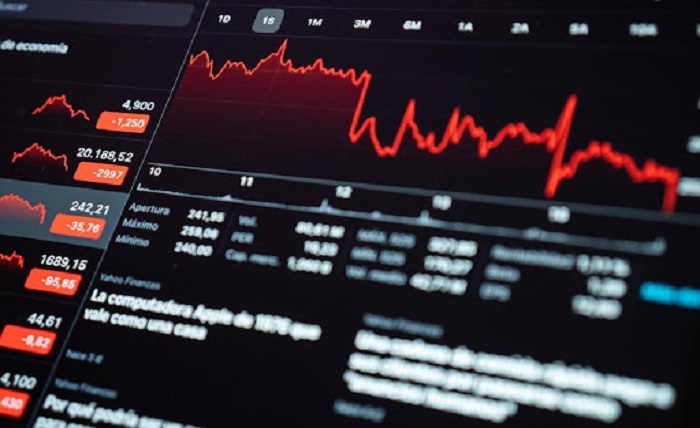
A trading platform allows traders to follow broader market movements without focusing on individual companies. MetaTrader 5, or MT5, combines market monitoring, chart analysis, order management, and trading functions within one interface. Understanding index trading through MT5 helps beginners learn about pricing, order types, leverage, margin, technical indicators, and risk management.
This guide explains the essential steps, indices trading platform features, and practical considerations involved in index trading, helping new traders build a clearer understanding of how markets operate and how trades can be planned and managed effectively.
What Is Index Trading?
A stock index measures the performance of a group of companies. Instead of buying every security represented by an index, traders can speculate on changes in its value through instruments such as Contracts for Difference, or CFDs. Examples include the S&P 500, NASDAQ 100, and GER40.
Indices can reflect economic conditions, investor sentiment, interest rate expectations, corporate performance, and announcements. Their movement is influenced by several constituent companies rather than one business.
Traders can take an upward or downward market view. A trader expecting an index to rise may consider a buy position, while someone anticipating a decline may consider a sell position. Results depend on price direction, position size, spreads, financing costs, and other trading conditions.
How MetaTrader 5 Supports Index Trading
MetaTrader 5 is a multi-asset platform that brings trading functions into one interface. Traders can monitor instruments, open charts, analyze prices, place orders, and manage positions.
The platform supports desktop, mobile, and web access. Beginners can learn where to find instruments, charts, orders, account information, and open positions. MT5 also supports technical analysis tools, multiple chart types, different timeframes, and automated trading capabilities.
Selecting an Index to Trade
Different indices have different characteristics because their constituent companies, economies, sectors, and trading sessions vary. The S&P 500 provides exposure to large US companies, while the NASDAQ 100 has substantial exposure to major technology and growth-oriented businesses.
Inflation data, employment reports, central bank decisions, interest rates, earnings announcements, and geopolitical developments can influence index prices. Traders should examine economic conditions alongside technical information before deciding which market to study.
Reading Charts in MT5
Charts provide a visual way to study price movements over selected periods. MT5 allows users to change timeframes and chart formats, helping them examine short-term activity or longer trends.
Candlestick charts display opening, closing, high, and low prices. Traders can study these patterns for trends, support, resistance, breakouts, and momentum changes. However, chart analysis cannot guarantee future performance because unexpected information can quickly change market behavior.
Using Technical Indicators
MT5 provides indicators that can help traders interpret price data. Moving averages can help examine market direction. The Relative Strength Index, or RSI, can provide information about momentum, while Moving Average Convergence Divergence, or MACD, can help study momentum and possible trend changes.
Beginners do not need every available indicator. Learning a few tools and understanding their limitations is often more useful than filling a chart with signals. Indicators should support analysis rather than replace judgment.
Understanding Order Types
MT5 supports different methods for entering and managing positions. A market order is generally used to enter at the available current market price, while pending orders can trigger when the market reaches a specified level.
Stop-loss orders can help limit potential losses by closing a position at a predefined level. Take-profit orders can close a position when a selected target is reached. These tools can help traders follow a plan rather than make emotional decisions.
During rapid price movements, execution can differ from the expected level, so traders should understand slippage and execution conditions.
Real-Time Pricing and Execution
Index prices can change quickly during major economic announcements and periods of increased activity. Real-time pricing helps traders observe movements and evaluate potential setups.
MT5 provides market monitoring and charting functions for following price changes. Execution speed also matters because prices can change between order submission and completion. Traders should understand spreads, possible slippage, market hours, and conditions affecting execution.
Leverage and Margin Explained
Index CFDs can involve leverage and margin. Leverage allows traders to control a larger position with less capital, while margin represents funds required to maintain exposure.
Leverage can increase the effect of both gains and losses. Beginners should understand position size, margin, leverage, and available equity before trading. Higher leverage does not automatically mean better opportunities. Appropriate exposure depends on risk tolerance, strategy, financial circumstances, and market conditions.
Risk Management for Index Trading
Risk management should be considered before opening a position. Position sizing determines how much capital is exposed to a market movement.
Traders can establish stop-loss levels, define profit targets, and avoid excessive exposure in one position. Monitoring available margin is important when using leveraged products.
A trading plan can include entry criteria, exit conditions, maximum acceptable loss, position size, and circumstances under which a trade should not be opened.
Practicing With a Demo Account
A demo account can help beginners learn MT5 without immediately committing real funds. Users can practice opening charts, selecting instruments, placing orders, adjusting positions, and using risk controls in a simulated environment.
Demo trading can also help test a basic strategy and improve platform familiarity. However, simulated trading does not fully reproduce the emotional pressure of real financial losses, so traders should remain cautious when moving to live trading.
Conclusion
Learning how index trading works through MetaTrader 5 requires understanding indices, charts, order types, leverage, margin, and risk management. A reliable indices trading platform combines these functions with real-time pricing, analytical tools, strategy testing, and multi-device access. For beginners, practicing with demo accounts and developing disciplined trading habits can provide a stronger foundation for informed and responsible trading decisions.
Explore advanced trading tools and diversified market access with greater flexibility and confidence. Skyriss provides multi-asset trading through MetaTrader 5, supporting access to indices, forex, commodities, stocks, ETFs, and crypto. Its platform includes advanced charting, real-time market data, strategy testing, automated trading capabilities, and access across desktop and mobile devices. Skyriss also provides educational courses and MT5 tutorials to support traders at different experience levels. Trading leveraged CFDs involves significant risk and requires careful consideration before participation.