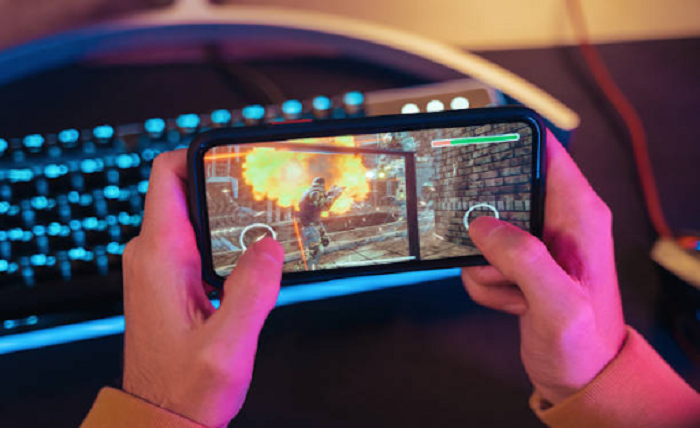
Online gaming feels most alive when something is happening now. A teammate calls for support, an opponent changes direction, a live event begins, or a group must make a decision before the opportunity disappears. These moments explain why so many online games are designed around real-time participation rather than delayed interaction.
Real-time systems turn a digital game into a shared space. Players are not simply responding to programmed challenges. They are reading other people, adapting to unpredictable behaviour, communicating under pressure, and influencing a world that keeps moving. For gaming enthusiasts, understanding this approach makes it easier to appreciate matchmaking, latency, live events, teamwork, and the competitive rhythm behind modern online play.
Real-Time Action Creates Meaningful Player Decisions
A real-time game asks players to make choices while conditions are changing. That difference transforms the entire experience.
In a single-player or turn-based situation, players may have time to study every option. In real-time online play, information can become outdated within seconds. A safe route may suddenly be blocked. A weak opponent may receive backup. A teammate may change the plan after noticing an opening.
This creates decisions with immediate consequences. Players must judge distance, timing, risk, positioning, and the likely behaviour of others. Mechanical skill matters, but awareness often matters just as much. Experienced players learn to watch the wider match rather than focusing only on what is directly in front of them.
The result is a gameplay loop that stays fresh. Even when the map, rules, and objectives remain the same, human reactions make each session different.
Shared Timing Makes Multiplayer Feel Social
Online crown96 casino partnership games are social because participants occupy the same moment, not merely the same platform.
Voice chat, pings, emotes, movement, and quick signals allow players to coordinate without stopping the match. A well-timed warning can save a teammate. A coordinated push can break a defence. Even playful actions feel more meaningful because everyone experiences them together.
Real-time participation also creates accountability. In team-based games, each player’s actions affect the group immediately. Leaving an objective unguarded, ignoring a callout, or arriving late can change the outcome. Strong cooperation becomes satisfying because success is visibly shared.
Cross-platform services now support multiplayer connections, social features, persistent player data, and play across different devices, helping more communities participate in the same online spaces.
Competition Depends on Fast and Consistent Feedback
Competitive online gaming works best when players feel that their inputs produce understandable results.
When a player moves, attacks, blocks, or activates an ability, the game must process that action and communicate it to others. Network delay can create a gap between what a player does and what appears on screen. Unity’s networking documentation explains that developers use techniques such as prediction, server authority, and server rewind to balance responsiveness with a consistent shared game state.
This is why latency is more than a technical detail. It affects aiming, movement, timing, and confidence. Low and reasonably balanced latency helps players feel that outcomes are connected to their decisions.
Matchmaking systems may also consider player latency when selecting server locations. Amazon GameLift documents latency-based placement policies intended to avoid sessions where players would experience excessively high delay.
For enthusiasts, a stable wired connection, nearby server region, sensible graphics settings, and background-download management can improve real-time play.
Live Worlds Give Players a Reason to Return
Many online games operate as changing environments with rotating modes, timed challenges, seasonal updates, community goals, and scheduled events.
Real-time participation gives these features urgency. A limited event feels important because players know others are joining at the same time. A changing map or temporary rule set becomes a shared community experience rather than a private checklist.
This richman96 pokies australia structure also creates stories that cannot be completely scripted. Players remember unexpected comebacks, last-second victories, unusual team combinations, and major community moments. These memories often become part of a game’s culture through clips, livestreams, forums, and conversations.
Enthusiasts should still avoid treating every timed event as mandatory. A healthy approach is to choose events that match personal interests and available time rather than allowing constant schedules to turn recreation into obligation.
Real-Time Design Rewards Preparation
Fast participation does not mean thoughtless participation. Strong players prepare before the action begins.
Useful habits include:
- Learning map routes, objectives, and common danger areas
- Checking equipment, controls, audio, and connection quality
- Understanding a character’s role before entering ranked play
- Using clear callouts instead of filling voice chat with unnecessary noise
- Reviewing mistakes after a match rather than blaming every loss on teammates
- Taking short breaks when concentration begins to fall
Why Real-Time Participation Remains Central
Online gaming is built around real-time participation because immediacy creates uncertainty, cooperation, competition, and shared emotion. Players are not only interacting with game systems. They are responding to living communities whose choices reshape every match.
For enthusiasts, the best experience combines technical readiness with social awareness. A reliable connection supports responsiveness, but communication, patience, and adaptability turn real-time play into something stronger. That balance is what makes online gaming feel less like using software and more like entering an active world.